inspiration hub
/
blogs
/
How Can Heritage Bathrooms Balance Historic Character with Modern Comfort?
Solution Showcase
How Can Heritage Bathrooms Balance Historic Character with Modern Comfort?
24 January 2026
|
Johnny Claydon, Senior Site Manager, ACT
Modernising bathrooms in period and listed buildings demands a careful balance between preserving historic character and delivering contemporary levels of comfort and performance. Drawing on his first-hand experience of delivering complex heritage projects, Johnny Claydon, Senior Site Manager at ACT, sets out the key considerations when creating elegant bathroom spaces that celebrate the best of both worlds.
Why Is a Survey Essential Before Starting Renovation Work?
The foundation of any successful heritage bathroom project is a thorough understanding of the building’s existing structure. Early surveys and investigative works are critical to establish how the building has evolved through time and any constraints that are present. This is especially true in older buildings where joist obstructions, hidden repairs, structural layouts and service routes often differ markedly from expectations.
Where opening-up surveys are limited, a degree of assumption is unavoidable and the project team must build in flexibility. In these situations, close collaboration between architects, contractors, designers and consultants is vital in order to identify design opportunities and creatively adapt drawings once actual site conditions become apparent. This responsive approach reduces delays, protects historic fabric and ensures solutions are informed by reality rather than theoretical assumptions.


How Do You Maintain Heritage Character While Meeting Modern Standards?
In listed settings, statutory requirements determine which features must be retained. Elements such as cornicing, sash windows, wall linings and original floorboards all require careful assessment and protection or treatment to withstand bathroom conditions.
Beyond regulatory compliance, retaining original features can enhance the character of a bathroom. Distinctive elements such as door furniture, skirtings, heritage sanitary ware and period lighting reference the property’s architectural past while adding sustainability credentials through re-use. This can involve a process of reinterpretation: refurbishing antique light fittings to meet current safety standards, or adapting existing sinks to accommodate modern plumbing systems.
How Can Modern Technology Be Integrated Discreetly?
The most effective interventions are those that remain discreet and reversible. Modern components such as fan coil units, lighting drivers and dimmer modules can be integrated within custom-made traditional joinery. Access points should be strategically located and unobtrusive, ensuring that systems remain serviceable without compromising visual integrity.
Wet rooms present particular challenges in period buildings. Historic floor structures typically lack the depth required for contemporary drainage and waterproofing installations, while lowering ceilings below is rarely appropriate. In these situations, solutions can include:
- Using targeted structural adaptations to create new service routes
- Subtly raising floor levels to achieve the necessary drainage depth without disturbing the historical shell
- Utilising slimline underfloor heating and advanced waterproofing technologies that minimise the impact on original fabric
Keeping up-to-date with the latest product innovations can identify further ways to preserve period authenticity while delivering modern performance.
What Are the Key Risks When Updating Bathrooms in Period Properties?
Water management is one of the most critical risk areas in heritage bathrooms. Leaks can cause disproportionate damage in period buildings, affecting irreplaceable materials and architectural features.
Mismatches between water supply and drainage are a common cause of long-term issues. Recommendations to address this include:
- Rigorous testing of incoming water pressure and supply systems
- Confirming that appliance flow rates correspond with drainage routing and capacity
- Installing early-warning leak detection sensors for proactive identification
- Implementing containment strategies in anticipation of a leak occurring
Structural loading is another important consideration, as heavy items such as cast-iron roll-top baths or stone basins may require reinforcement of existing floor structures. Since these interventions can affect underfloor heating layouts, drainage falls and ceiling heights below, early coordination between architects, structural engineers and contractors is paramount.
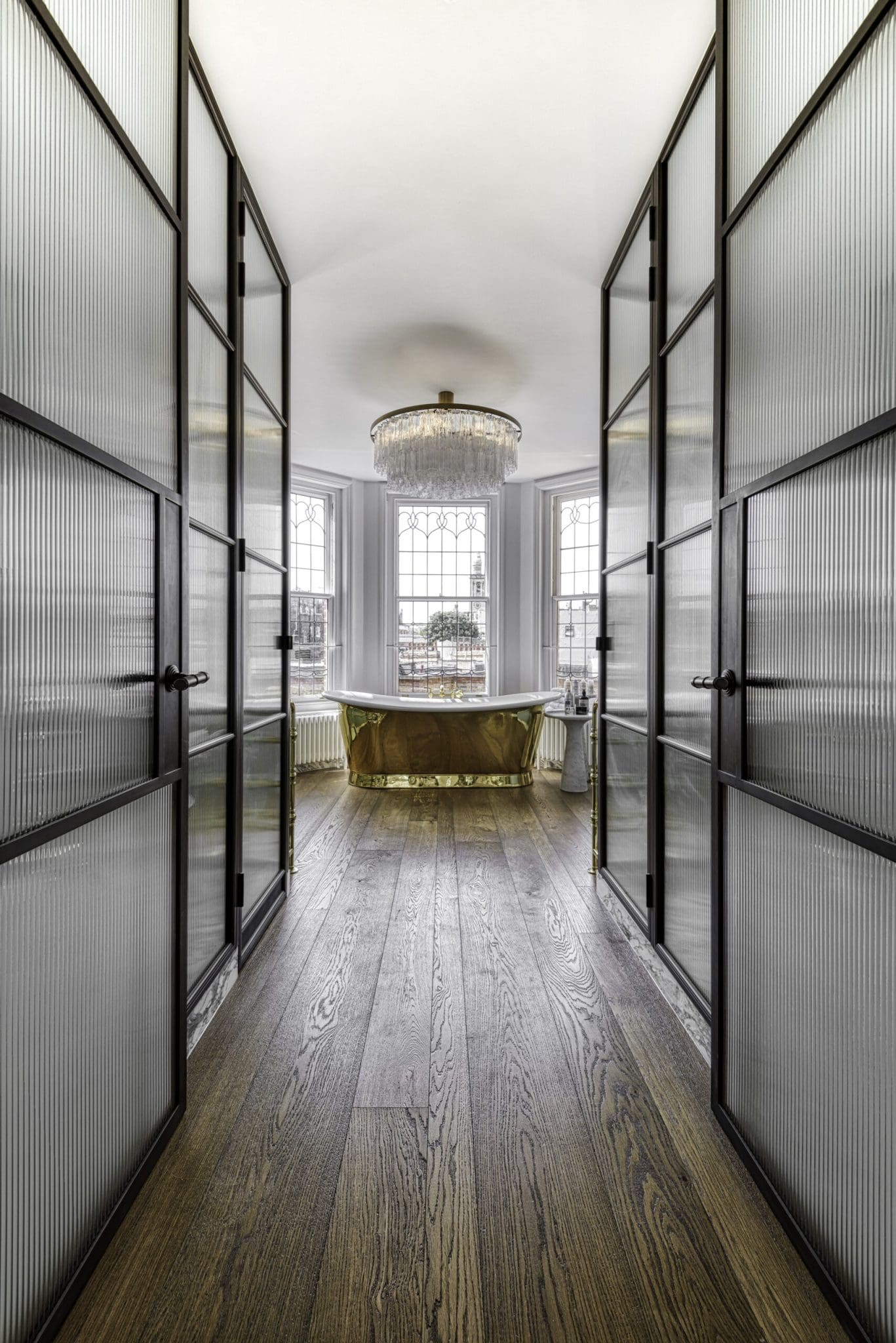

In Summary: Three Keys to Balancing Heritage Charm with Modern Performance in Bathroom Design
Balancing heritage with innovation requires knowledge of historic construction methods alongside solutions that discreetly deliver modern comfort. Success depends on three fundamentals:
- Early investigation to understand the building’s structure and limitations
- A solutions-led approach grounded in hands-on technical expertise
- Proactive communication amongst the project team throughout
When these elements work together, the result is a bathroom that feels elegant and timeless while providing high levels of functionality.
About the Author
Johnny Claydon is Senior Site Manager at ACT. With extensive experience of managing super-prime residential renovations including complex heritage bathroom installations, Johnny brings both deep technical know-how and practical problem-solving to his work.
A version of this article appeared in November 2025 in Refurb & Renovation News which is available to read here (issue 70, see page 11).
Share this Article:

Balancing Heritage And Modern Comfort Through Bathroom Design
Explore our Portfolio for further examples of how ACT marries contemporary comfort with heritage character across projects ranging from five-storey townhouses to mews properties and warehouse conversion projects.
