inspiration hub
/
blogs
/
The Paradox of Simplicity: Achieving Invisible Luxury in Super-Prime Homes
In the Making
The Paradox of Simplicity: Achieving Invisible Luxury in Super-Prime Homes
30 January 2026
|
Cameron de Wys, Founding Director, ACT
Drawing on our Founding Director's personal project experience, this article explores the integration of advanced systems in super-prime homes. It explains why contemporary luxury is increasingly defined as much by what we don’t see as what we do, and describes the technical challenges involved.
What do Today’s Super-Prime Clients Really Value?
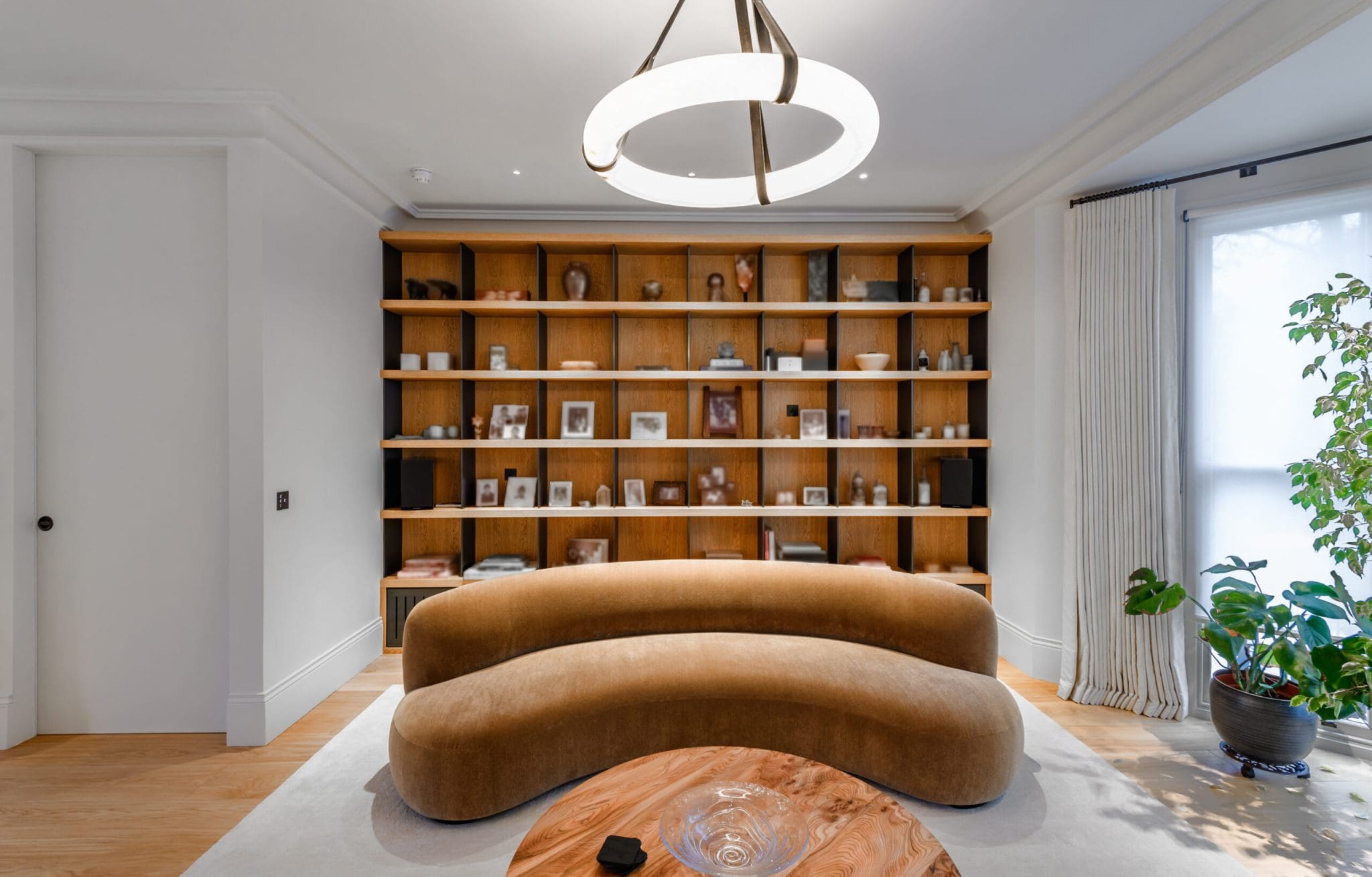
Super-prime homes are often associated with rare materials, architectural statements and expansive basements. However in practice, the most prized luxury is often the least visible.
This form of quiet luxury is experienced rather than observed. Clients expect environments that automatically regulate air quality, temperature, humidity and lighting without visual intrusion – and all at the touch of a switch.
What is Invisible Luxury?
Invisible luxury refers to the seamless integration of architecture, craftsmanship and advanced building systems to elevate comfort, wellbeing and performance without being detectable. It means intuitive living in environments that feel calm, carefully calibrated and deceptively simple.
Achieving this sense of ease requires a high level of technical expertise, meticulous coordination and millimetre precision.
Why is it Challenging to Deliver?
In practice, achieving invisible luxury means carefully integrating complex mechanical, electrical and digital systems so that they disappear into the architecture. Controls should be simple to operate and discreet. Performance should be immediate and reliable.
Invisible luxury finds beauty in precision: clean lines and pared-back detailing that leave no margin for error. Flush skirtings, frameless doors and shadow gaps as small as 4mm demand millimetre accuracy across structure, finishes and services.
Particularly in heritage and period properties where traditional skirtings, architraves and cornices once concealed imperfections, achieving absolute precision often represents a very technically demanding part of the build.
How is Performance Hidden Without Compromising Function?
Behind a single point of control can sit an entire network of precisely coordinated systems. Delivering invisibility while maintaining access, compliance and long-term performance requires specialist knowledge and early technical planning.
Typical interventions in super-prime homes include:
- Air-conditioning vents integrated into cornices, joinery or architectural features
- Thermostats concealed within wall finishes or bespoke cabinetry
- Moving bookcases providing hidden access to mechanical and electrical services
- Underfloor heating retrofitted into existing floor build-ups without raising levels
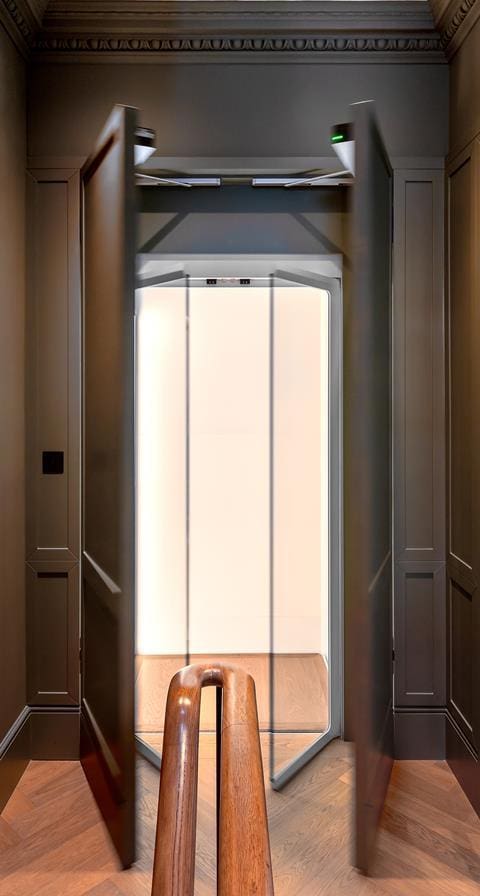
- Dual-operating panelled doors concealing lifts while maintaining traditional proportions
Even lifts can be carefully concealed behind traditional panelled doors that dual-operate. Achieving this result safely, and in full compliance with regulations, requires precise automation, rigorous coordination across specialist trades as well as exceptionally high levels of accuracy.
(Image: Traditional panelled doors disguise the presence of a lift)
How Does Invisible Luxury Shape Material Choices?
This level of design refinement involves re-engineering traditional materials. For example honeycomb-backed stone allows large-format slabs or suspended stone ceilings to appear weightless while remaining structurally sound. Timber doors exceeding four metres in height incorporate concealed steel or aluminium cores to ensure they remain perfectly straight.
Specialist moulds, hidden fixings and bespoke supports enable mechanical and electrical systems to be absorbed into historic plasterwork, stone and joinery without compromising the original fabric.
What are the Critical Success Factors for Delivering Invisible Luxury?
Invisible luxury is the product of rigorous planning and close collaboration. The most critical phase typically occurs between RIBA Stages 3 and 5, where design intent is translated into construction reality. At this point, the main contractor’s design management team works closely with architects, interior designers, engineers and specialist trades to coordinate interfaces, tolerances and sequencing.
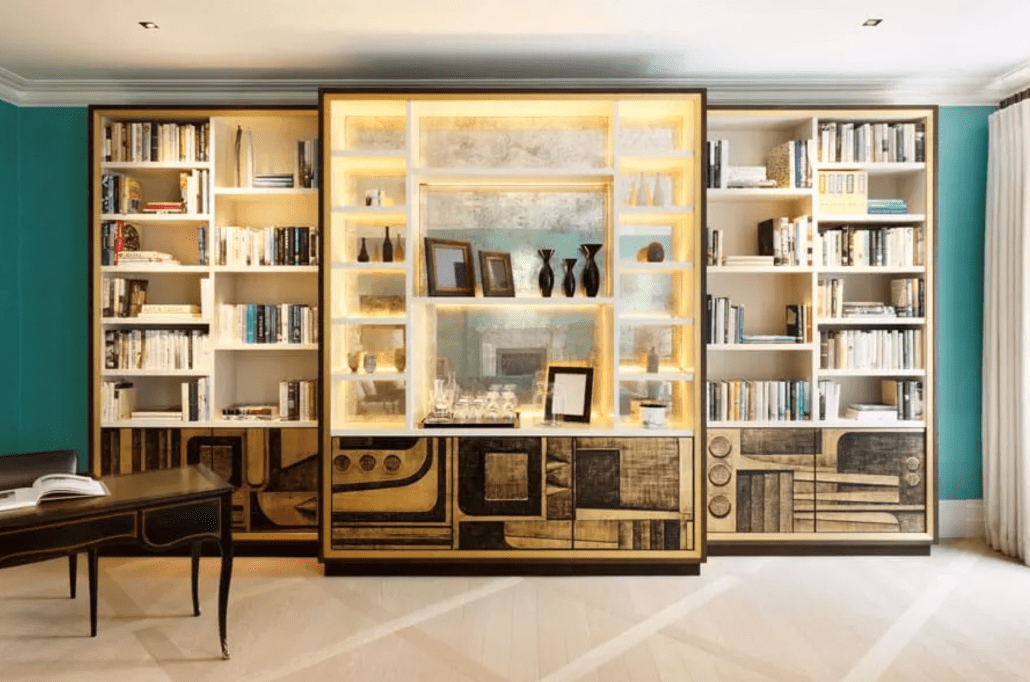
A single wall elevation of bespoke joinery may conceal air-conditioning units, AV equipment, lighting controls and sensors, all accessible for servicing. Each elevation like this is a one-off, combining creativity, engineering and precision. An archetypal super-prime home contains many such structures, each bespoke and technically intricate. Success depends on methodical design management, detailed sampling and uncompromising quality control, bringing together the work of a dozen specialist trades and engineers. The design management team plays a pivotal role in balancing technical performance, aesthetics, accessibility and the sequencing of trades.
The Future of Luxury Homes
As homes evolve into private sanctuaries of comfort, wellness and security, client expectations – and the complexity of systems – will continue to grow. The challenge for project teams is to ensure that this shift toward increased performance is never at the expense of visual quality.
Cameron's Top Five Takeaways
- High-end homes are increasingly defined as much by how they feel as how they look
- Invisible luxury focuses on comfort, performance and wellbeing rather than visual display
- Clients expect advanced systems to be discreet, intuitive to use and fully integrated
- Making performance “disappear” demands careful planning, technical precision and exceptional coordination, particularly when achieving clean, minimal designs
- Heritage features and contemporary technologies must coexist. There are numerous innovative ways to discreetly integrate advanced systems into period homes without altering their historic fabric
About the Author
Cameron de Wys brings over two decades of expertise to the super-prime residential sector. From his early career as a carpenter in New Zealand’s luxury housing market to co-founding ACT, a leading high-end main contractor, Cameron has worked hand-in-hand with architects, designers and specialist consultants to translate ambitious design concepts into precisely executed homes.
A version of this article was originally published in Building Design Magazine in November 2025, and is available here.

Share this Article:

What defines luxury in high-end residential construction?
Our blog post offers an expert perspective on invisible luxury in super-prime homes, exploring project coordination, material innovation and the hidden systems that define modern comfort. Browse ACT’s Inspiration Hub for more super-prime industry insights, case studies and company news.
